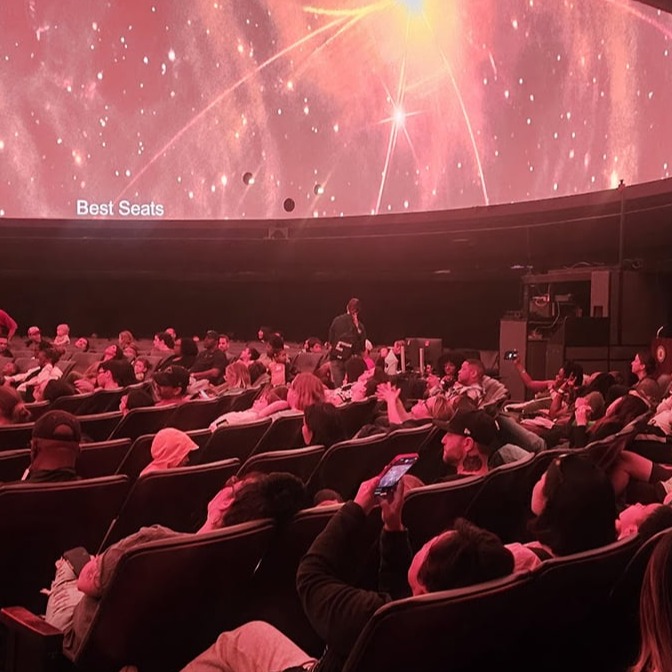
Fernbank Science Center offers planetarium programs for schools, non-DeKalb County School District teachers, homeschool groups, youth organizations, community groups, and other organized groups looking for engaging science experiences. Because availability and capacity vary, groups should submit requests as early as possible - ideally at least 10 days in advance - to allow time for scheduling, transportation, and other visit arrangements. Programs are available on a first-come, first-served basis. Submission of this form does not guarantee a reservation. Fernbank Science Center will review your request and send confirmation after the program has been scheduled.
Cost for Group Visits
Group visits for non-DCSD schools are $5 per student and $10 per adult. Groups receive one complimentary adult admission for every 10 students. Additional adults are charged the regular $10 adult group rate.
Instructions
Audience: Pre-K, Kindergarten
Georgia Performance Standards:
SKE1. Obtain, evaluate, and communicate observations about time patterns (day-to-night and night-to-day) and objects (sun, moon, stars) in the day and night sky.
Program Description:
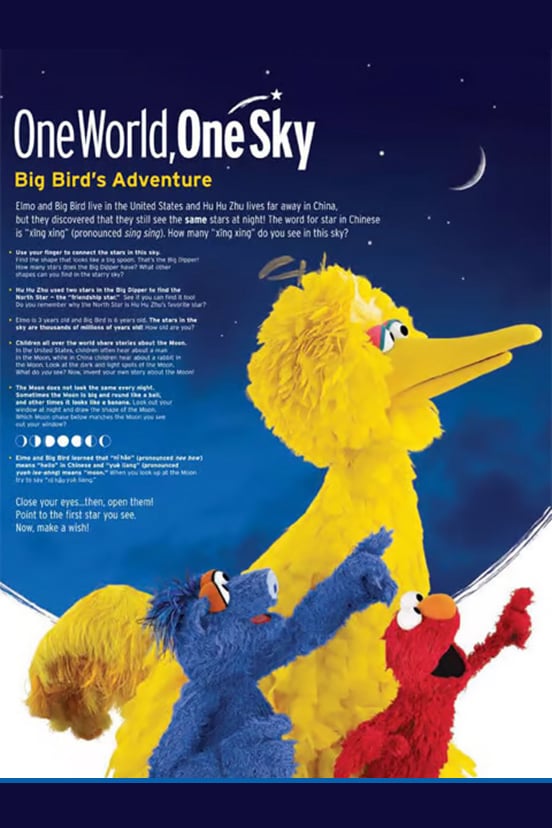
Sesame Street friends Big Bird, Elmo and Hu Hu Xhu take the audience on an exciting journey of discovery
to learn about the Sun, stars and Big Dipper. Students join an imaginary trip to the Moon, where they
discover that no matter where we live, we all share the same sky.
WATCH TRAILER
Click for Full Program Guide
Tilt
Audience: 1st Grade
Georgia Performance Standards:
S1E1. Obtain, evaluate, and communicate weather data to identify weather patterns.
Program Description:
Students will enjoy a demonstration of Earth’s tilt using the visuals of the planetarium. Students will experience how the sun changes height in the sky and how that relates to the pattern of the seasons. When the seasons go crazy, it’s up to Annie and Max to set things right. But fixing this will take something extraordinary, and a little help. Come on a whirlwind adventure as the siblings learn just how the seasons and work, and discover that sometimes, all we need is a new angle on the world.
WATCH TRAILER
Click for Full Program Guide
3-2-1 Liftoff!
Audience: 2nd Grade
Georgia Performance Standards:
S2P2 Obtain, evaluate, and communicate information to explain the effect of a force (a push or a pull) in the movement of an object (changes in speed and direction).
Program Description:
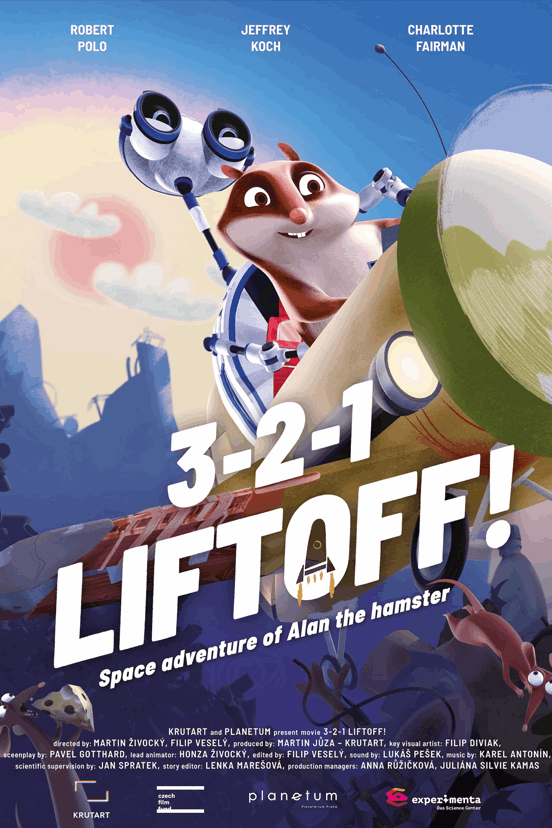
Alan is a hamster scientist who lives in a dump yard. He tries to fit in the local rats’ community but nobody takes him seriously. The rats aren’t interested in his scientific experiments which often fail in practice.
One day Alan hears a crash. In his garden he finds a crater and a damaged robot inside. How did he get here? Alan fixes the robot and finds out that he fell from a spaceship which is going to prepare Mars for colonization. But the ship leaves in three days.
And that’s how Alan’s great adventure starts. Will he manage to get the robot back to his ship before it leaves with all the robot’s friends? 3-2-1 Start! Is an adventurous animated fulldome film about courage and wits you need to have to get in space and back.
WATCH TRAILER
Click for Full Program Guide
The Alien Who Stole Christmas
Audience: 2nd, 3rd, 4th Grade
Georgia Performance Standards:
S2E2. Obtain, evaluate, and communicate information to develop an understanding of the patterns of the sun and the moon and the sun’s effect on Earth.
S3P1. Obtain, evaluate, and communicate information about the ways heat energy is transferred and measured.
S4E1. Obtain, evaluate, and communicate information to compare and contrast the physical attributes of stars and planets.
Program Description:
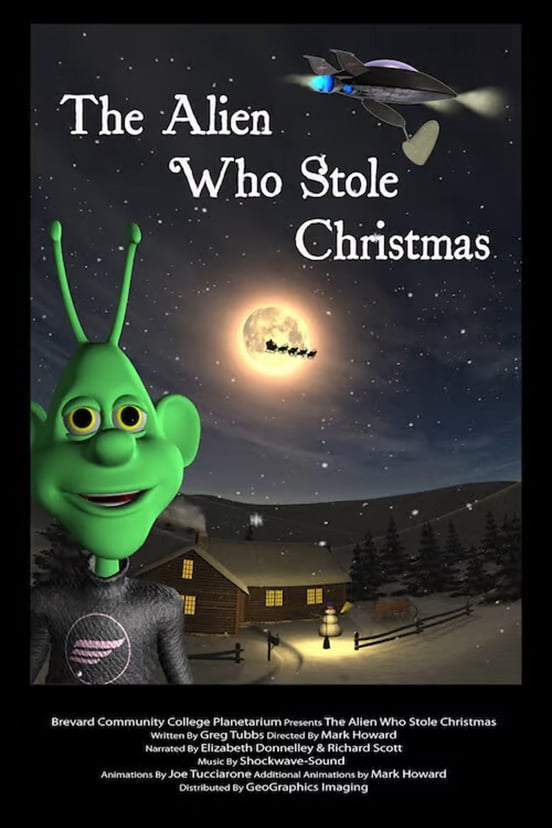
Enjoy a magical winter evening under the stars without leaving your seat in the planetarium! Join Santa and Mr. Freep, an alien from another world, on a cosmic adventure through the farthest regions of our Solar System. Will Santa make it back in time to deliver his toys? Join us this holiday season to find out!
WATCH TRAILER
Click for Full Program Guide
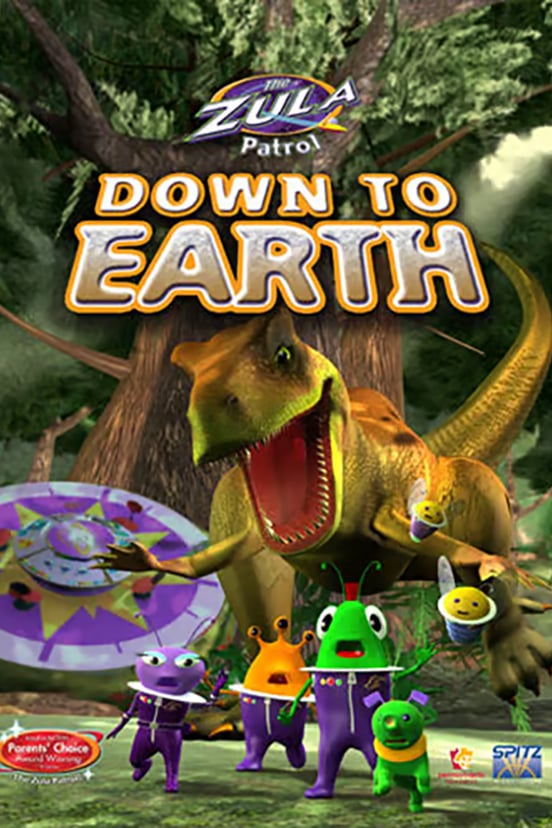
The Zula Patrol: Down to the Earth
Audience: 3rd Grade
Georgia Performance Standards:
S3L2 Obtain, evaluate, and communicate information about the effects of pollution (air, land, and water) and humans on the environment.
S3E2 Obtain, evaluate, and communicate information on how fossils provide evidence of past
organisms.
Program Description:
The stalwart heroes of the Zula Patrol are on an expedition collecting samples of weather for scientist Multo’s research. When the Zula gang inadvertently hurts their loyal pet Gorga’s feelings, he decides to leave Zula and find another planet to live on. Villain Dark Truder then tricks Gorga into helping with his latest nefarious scheme to rule the Universe. The Zula Patrollers find out and go after him, in the process learning all about weather, both terrestrial and interplanetary.
WATCH TRAILER
Click for Full Program Guide
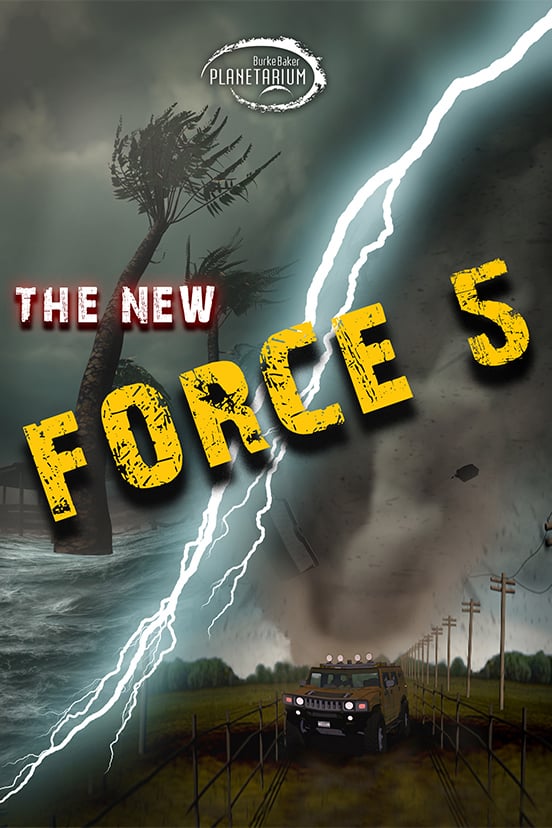
Force 5
Audience: 4th Grade
Georgia Performance Standards:
S4E2 Obtain, evaluate, and communicate information to model the effects of the position and motion of the Earth and the moon in relation to the sun as observed from the Earth.
S4E4 Obtain, evaluate, and communicate information to predict weather events and infer weather patterns using weather charts/maps and collected weather data.
Program Description:
Come explore, and experience, the most powerful storms on Earth: a hurricane at sea, a tornado’s funnel cloud, and a huge solar storm. Learn now these storms develop over time, and how they can turn into cataclysmic events.
WATCH TRAILER
Click for Full Program Guide
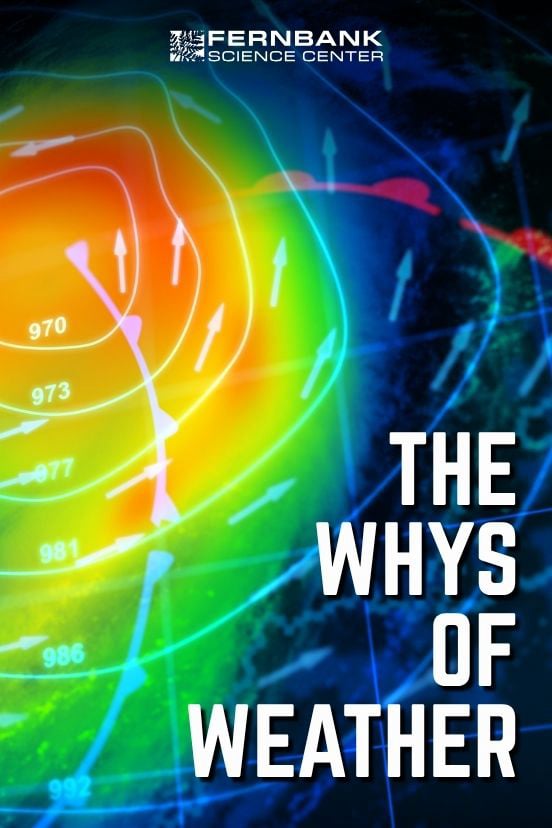
The Whys of Weather
Audience: 4th Grade
Georgia Performance Standards:
S4E1. Obtain, evaluate, and communicate information to compare and contrast the physical attributes of stars and planets.
S4E2. Obtain, evaluate, and communicate information to model the effects of the position and motion of the Earth and the moon in relation to the sun as observed from the Earth.
S4E4. Obtain, evaluate, and communicate information to predict weather events and infer weather patterns using weather charts/maps and collected weather data
Program Description:
You’ll leave the Planetarium looking to the sky in awe! Blast off on an astronomical meteorological adventure where your 4th graders will uncover the mysteries behind Earth’s seasons and master the art of weather maps and forecasting! Students will marvel at captivating clips about the changing seasons and watch the stars transform across the night sky. Then, they'll dive into hands-on fun, acting out weather map components like fronts and pressure changes, bringing weather patterns to life. This dynamic program blends cosmic exploration with meteorological mastery, sparking curiosity about our planet and beyond!
Click for Full Program Guide
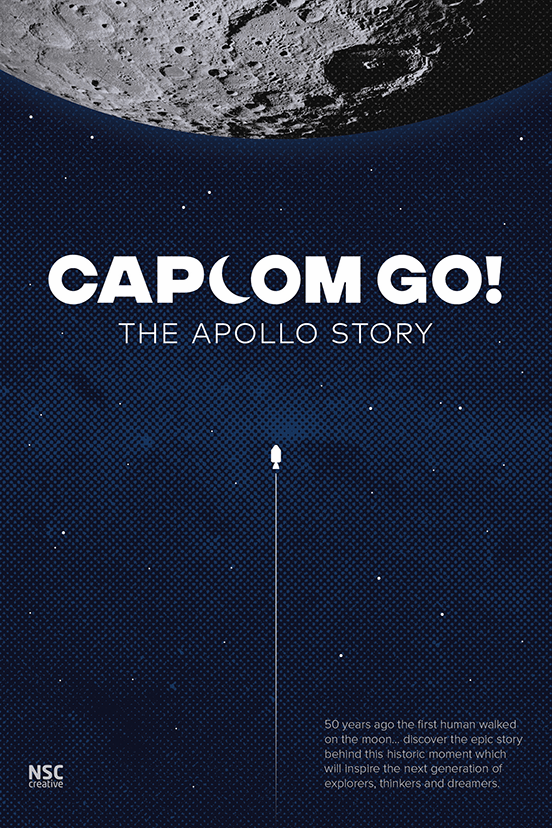
Capcom Go! The Apollo Story
Audience: 5th Grade
Georgia Performance Standards:
SS5H6 Describe the importance of key people, events, and developments between 1950-1975.
S5E1. Obtain, evaluate, and communicate information to identify surface features on the Earth caused by constructive and/or destructive processes.
Program Description:
On July 20th 1969, 600 million people around the world gathered to witness a historic moment of human
achievement broadcast live from the Moon. “That’s one small step for man, one giant leap for mankind” Neil
Armstrong. The world celebrated as the astronauts took their first steps on the Moon. But few people were aware of just how huge an effort it had taken to get them there. These Apollo 11 astronauts were just 2 of nearly 400,000 people who had worked over ten years towards this goal. But how did they do it? What did it take to put humans on the Moon?
WATCH TRAILER
Click for Full Program Guide
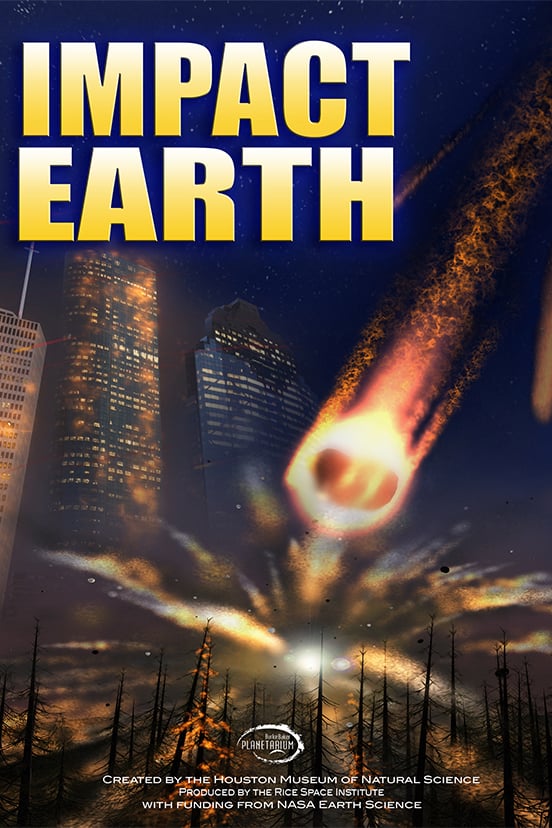
Impact Earth
Audience: 6th Grade
Georgia Performance Standards:
S6E1. Obtain, evaluate, and communicate information about current scientific views of the universe and how those views evolved
S6E5. Obtain, evaluate, and communicate information to show how Earth’s surface is formed.
Program Description:
Impact Earth teaches about meteors, meteorites, asteroids, and comets. The film shows dramatically the effects of the Chixulub and Tungusta events, plus the Pallasite impact that resulted in the Brenham meteorite fall. Impact Earth describes ways that asteroid hunters seek new objects in the solar system, and how ground penetrating radar is used to find meteorites that have survived to the Earth's surface. Narrated by astronaut Tom Jones, the show also discusses ways that humans might try to deflect an asteroid or comet that is on a collision course with Earth.
WATCH TRAILER
Click for Full Program Guide
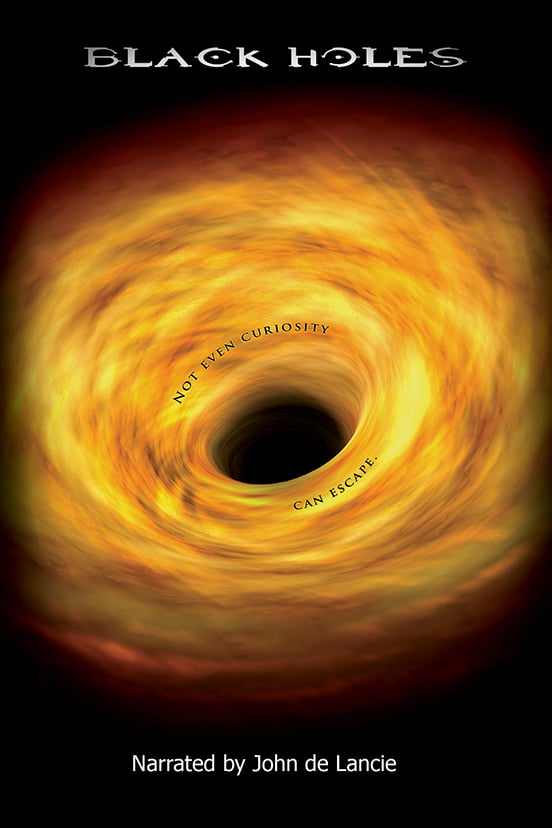
Black Holes
Audience: 9th - 12th Grade
Georgia Performance Standards
SAST5. Obtain, evaluate, and communicate information about the connections between mass, gravity and fusion with respect to the life cycle of stars.
SPS4. Obtain, evaluate, and communicate information to explain the changes in nuclear
structure as a result of fission, fusion and radioactive decay.
SPS7. Obtain, evaluate, and communicate information to explain transformations and flow
of energy within a system
Program Description
Black Holes takes you on a fully immersive journey through one of the most mystifying, awe-inspiring phenomena in the universe: a black hole. Where do they come from? Where do they go? How do we find them? Is there one on Earth’s horizon? What was Einstein’s connection to them?
WATCH TRAILER
Click for Full Program Guide
Audrey Poole
audrey_poole@dekalbschoolsga.org
Delancy Jacobs
delancy_n_jacobs@dekalbschoolsga.org
Mon - Wed: 12 PM - 4 PM
Th - Fri: 12 PM - 10 PM
Sat: 10 AM - 4 PM
P: 678-874-7102
F: 678-874-7110
156 Heaton Park Drive
Atlanta, GA 30307